Now that we’re experiencing another heat wave in Flanders, there’s nothing quite as blissful as the refreshing coolness of air conditioning. But what if, after a few days, you suddenly wake up with a sore throat, a runny nose, or a pounding headache? We’re quick to point the finger at the air conditioner. We conclude that we’ve gotten sick because of our air conditioning system. But is that really true? Does air conditioning actually make you sick, or is there something else going on?
As climate experts, we at AeroConsult We’re often asked this question during the summer. That’s why we’d like to explain how it all works. Find out what the actual biological causes of “air-conditioning sickness” are, how to recognize the symptoms, and how to deal with the correct settings and professional maintenance Enjoy a wonderfully cool indoor climate without any discomfort.
Can air conditioning really make you sick?
Let’s start right away with the biggest misconception: an air conditioner is not a virus factory. A cold, the flu, or a respiratory infection is caused solely by viruses or bacteria, not by cold air from your air conditioning system. A modern air conditioning system So it doesn't create germs. Why, then, do we often feel sick on hot summer days? The answer is purely biological and has to do with two factors.
- Incorrect settings and dry air: An air conditioner is designed to optimize the indoor climate. If the unit is set too cold during a heat wave, the system has to work hard and inadvertently removes too much moisture from the air. This isn’t due to the air conditioning system itself, but to an incorrect setting. If this causes the relative humidity to drop below the healthy threshold of 40%, the mucous membranes in your nose and throat may become temporarily irritated. The cilia in your nose will then function less effectively, allowing viruses already present in the room to spread more quickly.
- Temporary decrease in immunity: The sudden transition from the blazing sun to a freezing-cold room causes the blood vessels in your nose and throat to constrict. This reduces local blood flow and weakens your immune system, making you more susceptible to irritation.
In short: You don't get sick from the air conditioning, but from the conditions that an improperly adjusted air conditioner creates. That makes your body more vulnerable to viruses and bacteria.
The Real Culprits Behind Air Conditioning Complaints
If the air conditioner itself isn't to blame, what is causing those annoying symptoms? It all comes down to an incorrect setting and how to use your air conditioning system, the overdue maintenance and a lack of control over the indoor climate.
1. Temperature Whiplash
It’s tempting to set the air conditioner to 18°C right away when you come home sweaty while it’s 32°C outside. This massive—and especially sudden—temperature shock puts a heavy strain on your body. Your thermoregulation gets thrown off balance, your blood vessels constrict too quickly, and your immune system takes a temporary hit.
2. Direct draft on the body
Are you sitting at your desk in the office right in the path of a cold draft, or is the air conditioner blowing on you? in the bedroom at night Right next to your bed? That constant, direct stream of cold air cools your muscles and skin much too quickly in that specific area. Blood circulation slows down in those specific spots, which can lead to stiff muscles or tissue irritation.
3. Excessive dehumidification
An air conditioner cools by passing warm air over a cold evaporator, causing moisture to condense. If the temperature is set incorrectly, this process continues nonstop. The relative humidity plummets well below the critical threshold of 40%. As a result, your body literally becomes slightly dehydrated through your breathing and skin.
4. Overdue maintenance and dirty filters
Although the risk of serious bacterial infections in split-unit air conditioners While it is virtually out of the question, the danger does lie in dust, pollen and mold in the home. An air conditioner continuously circulates the indoor air. If the filters If the heat exchanger is not cleaned regularly, these microorganisms will accumulate in the unit’s damp environment. As soon as the air conditioner is turned on, these allergens are blown back into the room over and over again.
5. Recirculating air without ventilation
Many people, during a heat wave All windows and doors are tightly sealed to keep the heat out. If the air conditioner then continues to circulate the same indoor air for hours without adding fresh outdoor air or ventilation, the concentration of CO2 rises, fijnstof and any viruses that may be present in the room.
6. Individual Sensitivity
Not everyone reacts the same way to air conditioning settings. People with sensitive airways, COPD, or hay fever react much more strongly to temperature fluctuations and airborne dust. For them, a poorly adjusted or dirty air conditioner can immediately trigger or worsen existing medical conditions.
The typical symptoms of "air-conditioning sickness" during a heat wave
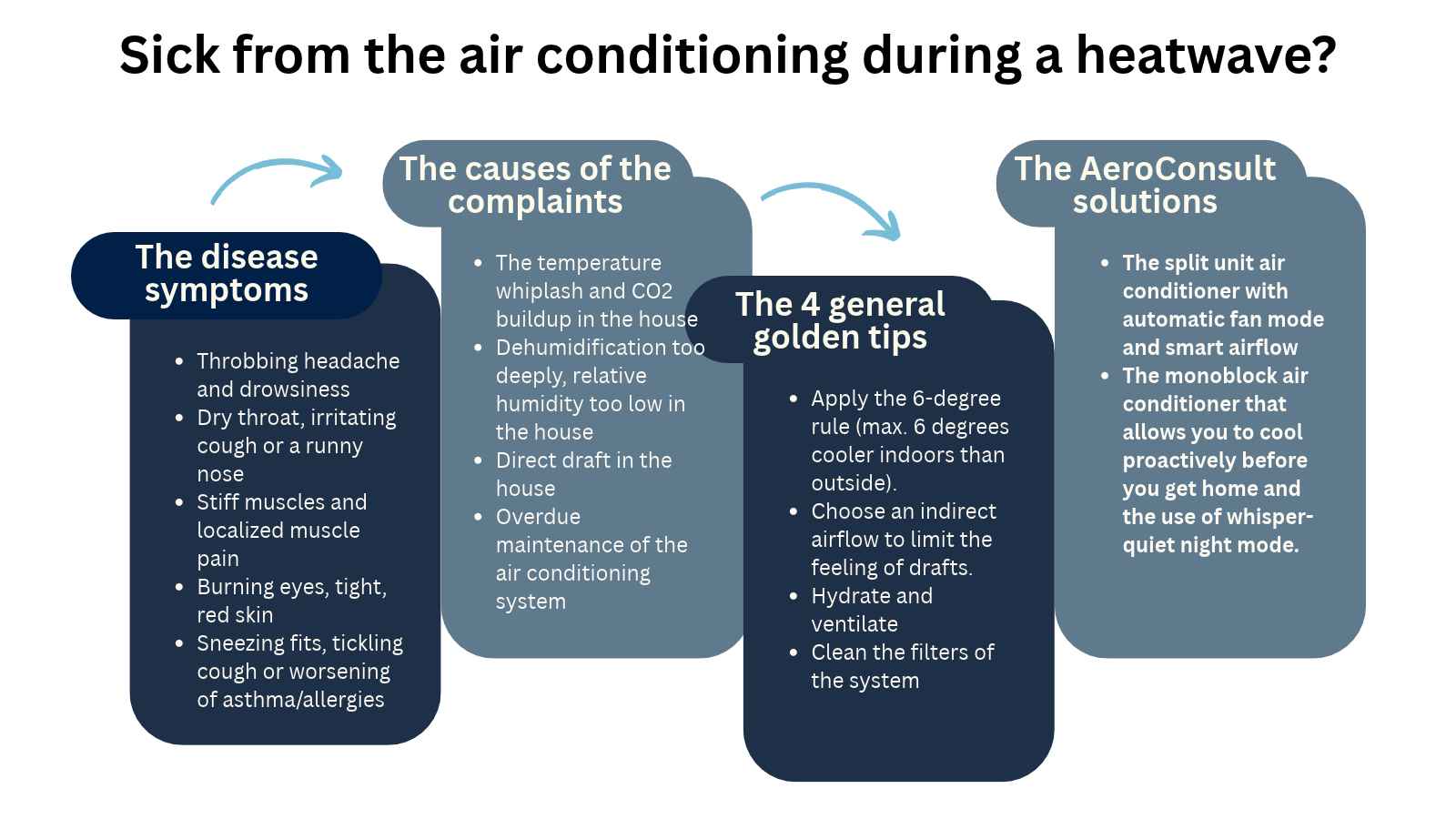
When one or more of the aforementioned culprits are left unchecked, your body reacts with specific symptoms. These are the most common symptoms that are wrongly labeled as “air-conditioning sickness.”.
- Dry throat and dry cough: The typical scratchy feeling in the throat, caused by dry air and irritated mucous membranes.
- Stuffy nose or runny nose: Your nasal mucosa reacts to the cold and dryness by producing or secreting extra mucus.
- Burning, dry, and tired eyes: The dry airflow is particularly harmful for people who wear glasses and those who spend a lot of time working in front of a computer screen, because it dries out the tear film on your eyes.
- Tight or dry skin: Low humidity causes the skin to lose its natural protective barrier. This results in redness and itching.
- Headaches and drowsiness: This is often the direct result of temperature fluctuations, dehydration, or a lack of fresh air and a buildup of CO2.
- Stiff neck and muscle pain: This happens when a freezing draft blows directly onto your body, causing your muscles to unconsciously tense up.
How do you solve this? The AeroConsult method for complaint-free cooling during a heat wave
Fortunately, you don't have to turn off the air conditioner during a heat wave to prevent these symptoms. With smart use, a few basic, common-sense rules, and the correct settings by type of air conditioning system you can simply enjoy the comfort the system has to offer, without the physical drawbacks.
The Four General Golden Rules for Setting Your Air Conditioner
- Follow the 6-degree rule: Prevent the dreaded temperature shock by minimizing the difference between the temperature outside and inside. Make sure the temperature difference is no more than 5°C to 6°C. Is it 30°C outside? Then set your air conditioner to 24°C or 25°C. Thanks to the lower humidity, this will still feel wonderfully cool without shocking your body.
- Choose an indirect airflow: Always point the louvers on your indoor unit upward or along the walls; never point them directly at yourself or others. Use the feature that allows the airflow from your indoor unit to distribute the cool air evenly.
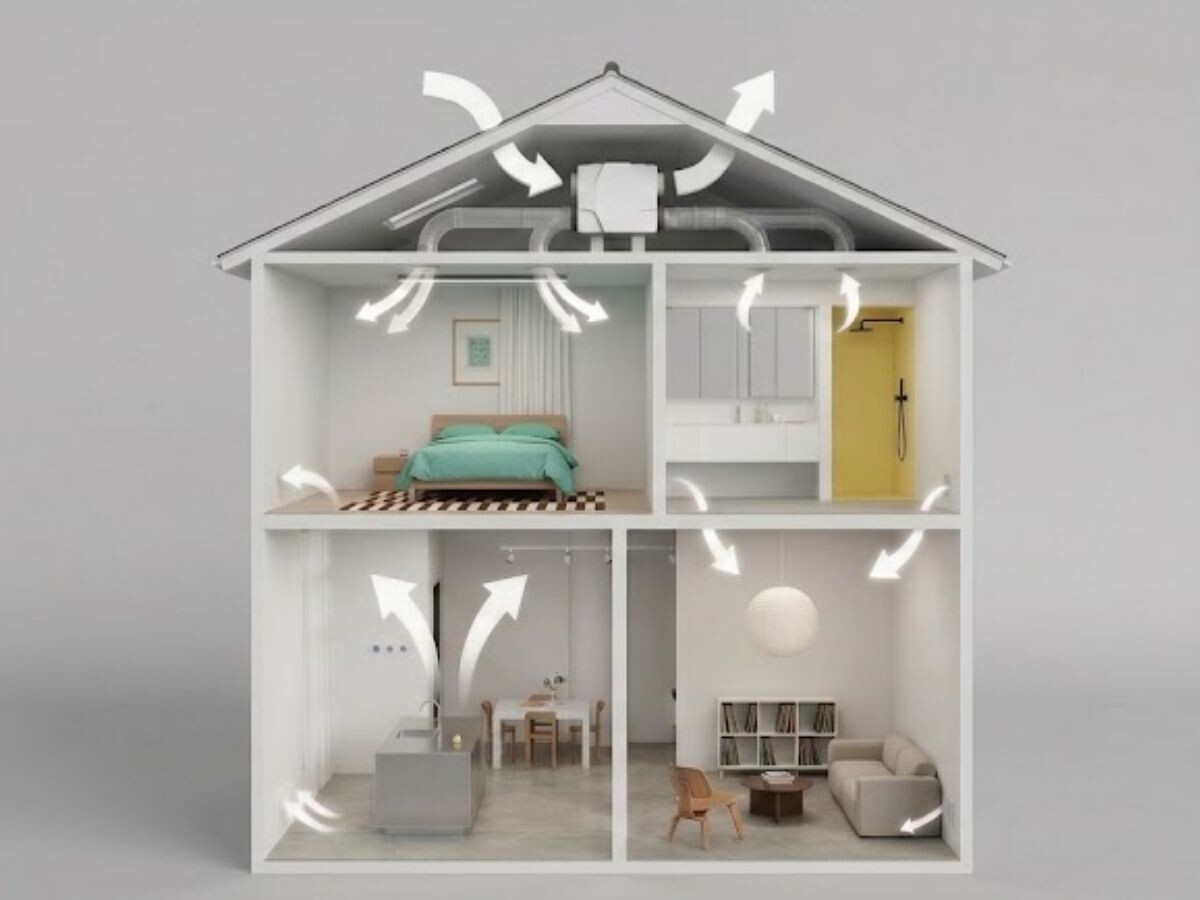
- Hydrate and combine with ventilation: Drink plenty of water when you're in an air-conditioned room to actively support your mucous membranes. Also, ensure a healthy indoor environment by combining air conditioning with mechanical ventilation, so that fresh, oxygen-rich air is continuously supplied.
- Schedule periodic and professional maintenance: Clean the dust filters Clean your indoor unit regularly by vacuuming or rinsing it yourself. In addition, an annual professional maintenance by AeroConsult is crucial. Our experts thoroughly clean and disinfect the heat exchangers using professional-grade products and also check the condensate drain. This removes all microorganisms and mold, ensuring that the air blown out is 100% pure and healthy.
Tips for AeroConsult's Specific Air Conditioning Systems
Depending on the type of air conditioning system you have in your home or office, we at AeroConsult are happy to provide specific tips to help you avoid air conditioning issues during a heat wave.
1. The split-unit air conditioner
A split-unit air conditioner consists of an indoor and an outdoor unit. This system offers the highest cooling capacity and is also whisper-quiet because the compressor is located outside.
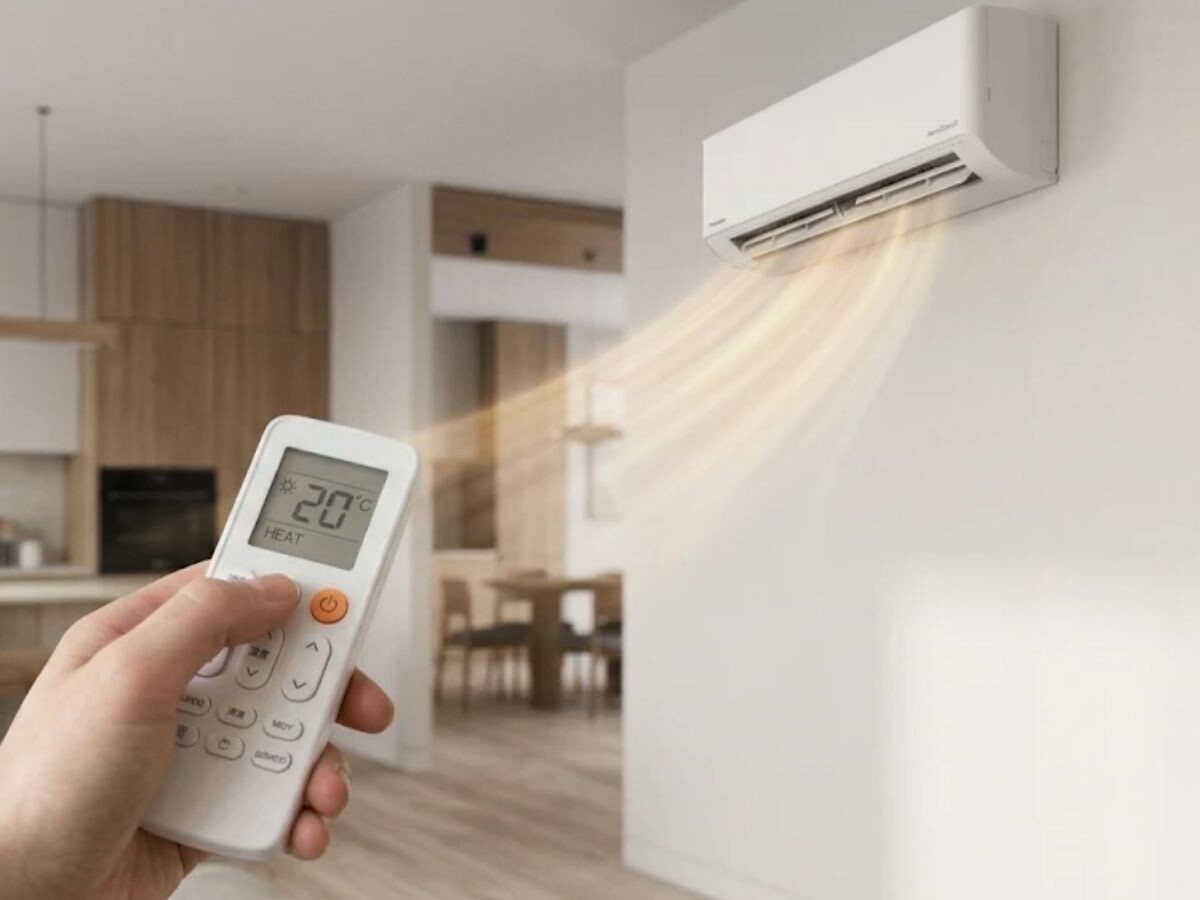
Heat wave tip: Activate Cool mode by pressing the snowflake icon. Then set the temperature to a comfortable 23°C or 24°C. Always use the automatic fan setting instead of manually forcing it to the highest setting. In automatic mode, the split unit automatically regulates the perfect balance. As a result, the system only blows air at high speed when it’s truly necessary and switches to a lower speed—quiet as a whisper—as soon as the desired temperature is approached. This maximizes the dehumidification balance—between 40% and 60%—and prevents the room from becoming freezing cold. In addition, use the remote control or app to adjust the louvers so they direct the airflow as high as possible toward the ceiling. Cold air naturally sinks, ensuring natural, healthy cooling without drafts.
2. The monoblock air conditioner
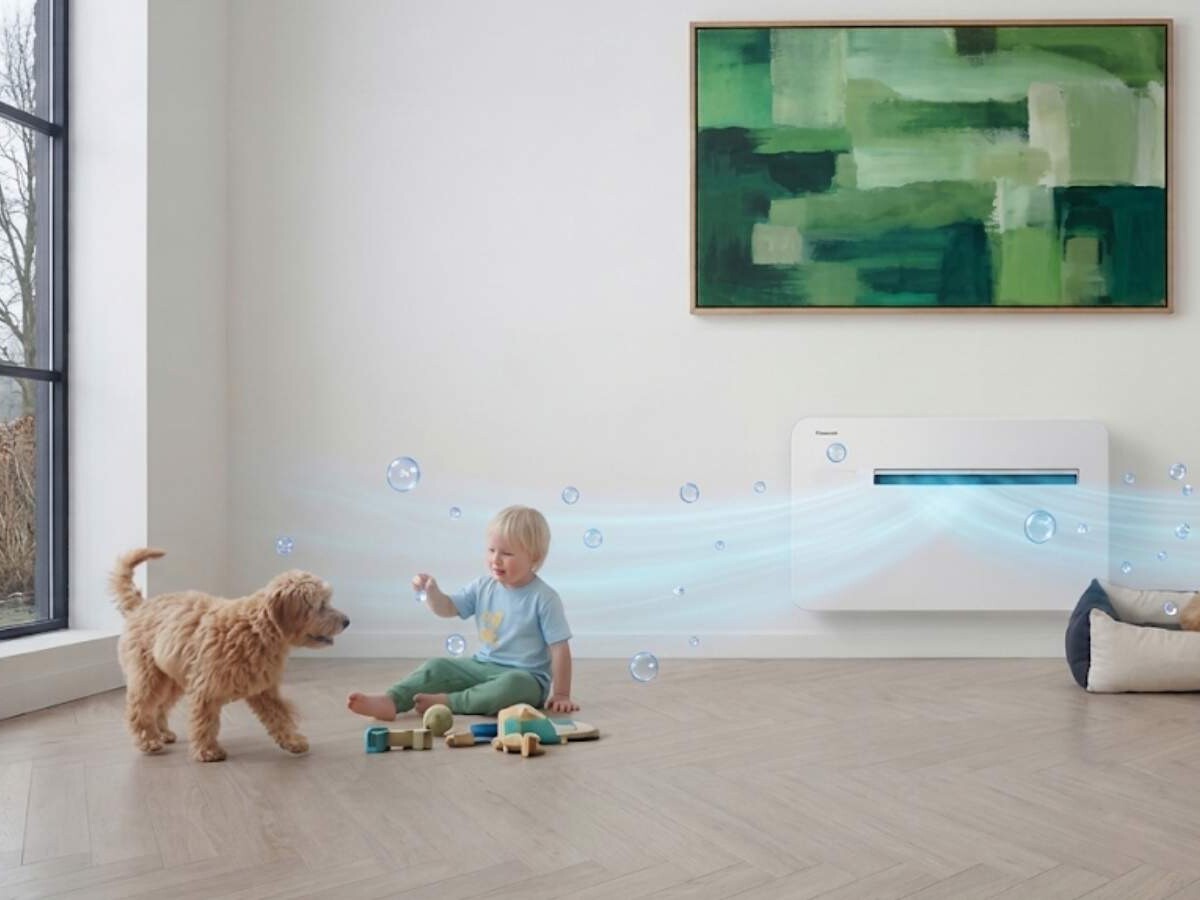
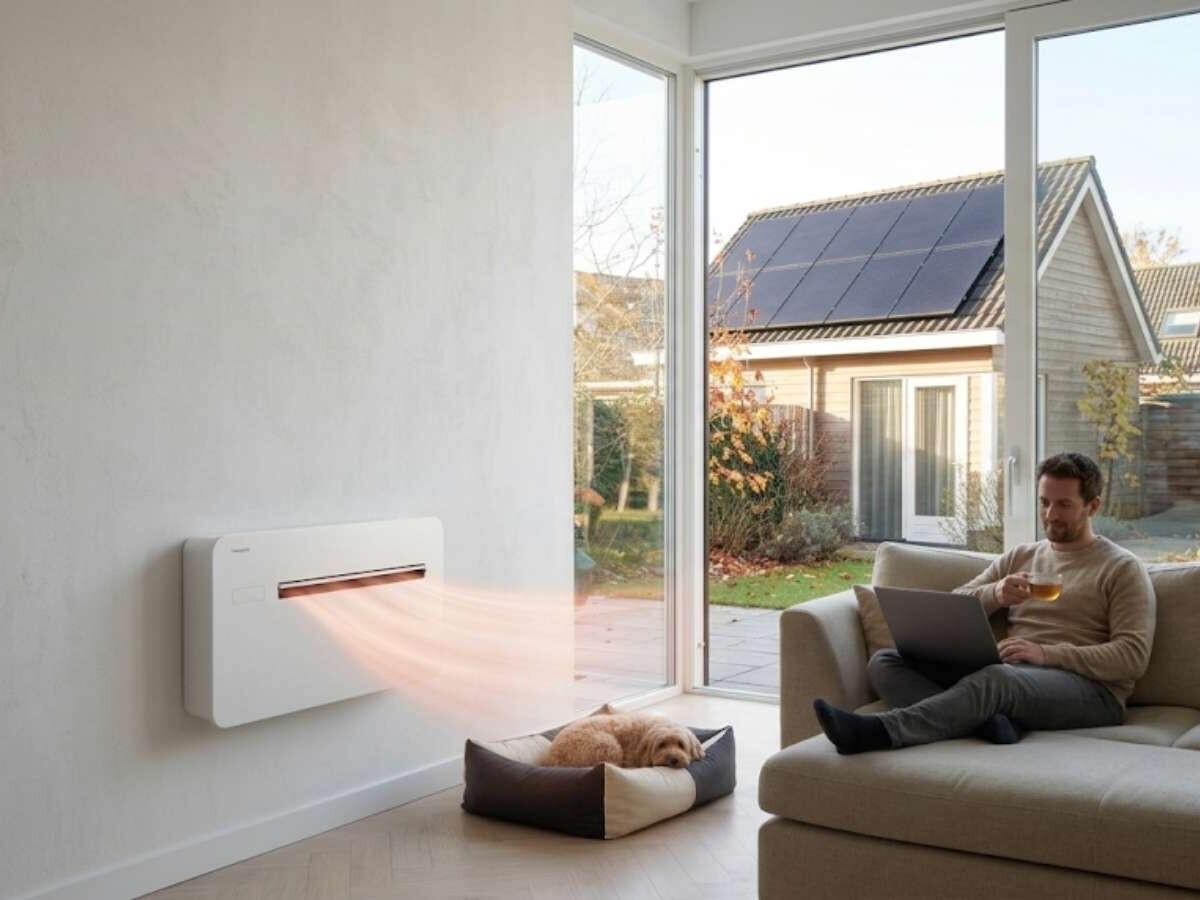
The monoblock air conditioner is AeroConsult's specialty. With this system, all the technical components are integrated into an elegant wall-mounted indoor unit. This means there's no need for an outdoor unit attached to your building's facade. This is ideal for apartments or historic buildings.
Heat wave tip: Because the compressor is built into the indoor unit in a monoblock system, it vents and transfers heat directly through the exterior wall via two separate vents. To prevent the unit from having to work too hard—which can result in both extra noise and an excessively dry airflow—proactive cooling is the solution here. Set the monoblock air conditioner to a lower, constant setting before the extreme heat enters the house. Also, take advantage of our system’s built-in ultra-quiet night mode. This mode reduces the compressor’s frequency to an absolute minimum, smooths out the airflow, and subtly adjusts the temperature at night. This way, you’ll avoid waking up in the morning with a stiff neck or a dry throat.
The Final Verdict on "Air-Conditioning Sickness": The Air Conditioner Is the Hero, Not the Culprit
When we look at all the facts, the conclusion is clear: air conditioning doesn’t make you sick during a heat wave. The system is simply a high-quality machine that blindly does what the user asks. The real causes of summer colds, stiff muscles, and dry mucous membranes therefore lie in an operating error of the unit, such as an ice-cold turbo setting, a direct draft, or overdue filter maintenance.
When you choose a high-quality air conditioning system, if you follow AeroConsult's tips and have an expert perform periodic maintenance, your air conditioner will be a real blessing for your health during a heat wave. It filters harmful substances, improves your a good night's sleep during hot summer nights and creates a perfectly balanced living environment in which your body can perform at its best.
Enjoy carefree, healthy coolness in your home this summer
Don't let a heat wave ruin your sleep or productivity. And don't let the fear of getting sick from the air conditioner get in the way of your comfort. With the right settings and a professionally maintained air conditioning system, it will be your best friend all summer long.
Is your air conditioner ready for the hot days ahead? Prevent problems, save on your energy bill, and avoid unpleasant odors. Take action today contact Join us for A free, customized assessment.
Want to learn more about the benefits of air conditioners? Check out our latest blog posts now.