As soon as winter arrives in Flanders, we all close our windows and doors and turn up the thermostat by a degree. We want to keep the cold out and save on our energy bills. That’s all understandable, but the first days of winter are also when we unconsciously lay the groundwork for an unhealthy indoor environment. Particulate matter, allergens, viruses, moisture, and CO2 quickly build up in a sealed home without ventilation.
At AeroConsult In the winter, we often hear the same concern from many homeowners: how can you ventilate your home effectively without letting all your precious heat escape through open windows? The sustainable answer lies in combining two essential climate solutions, namely mechanical ventilation with heat recovery and active air purification. In this blog, you'll discover how these two products come together in innovative climate solutions and how you can enjoy the best possible, healthy air quality this winter with minimal heat loss in your home.
Why Ventilation Is Important in Winter
Modern and renovated homes in Flanders are well-insulated and airtight. That's great for you EPC score, but without a well-designed ventilation system, your home turns into a sealed space where pollutants can easily build up. The idea that we should ventilate less in the winter because the outside air is too cold is a misconception with serious consequences.
There are, therefore, crucial reasons why continuous mechanical ventilation is indispensable in the winter for your health, comfort, and home.
- Preventing moisture problems and black mold: An average family of four produces 10 to 15 liters of moisture daily through breathing, sweating, cooking, showering, and drying laundry indoors. In an unventilated home during the winter, this warm, humid air condenses on the coldest surfaces in the room, such as windows, corners, and exterior walls. This creates the ideal breeding ground for black mold. Mold spores are dangerous and can lead to serious respiratory infections, asthma attacks, and chronic allergies.
- CO2 removal and oxygen supply: When windows and doors remain closed during the winter, the CO2 concentration in a bedroom or living room rises to alarming levels of over 1,500 ppm within a few hours. This leads to common complaints such as waking up with a headache, a dry throat, drowsiness, difficulty concentrating, and poor sleep. Continuous mechanical ventilation removes CO2 from the rooms and constantly brings fresh oxygen into the home.
- Removal of harmful chemicals and VOCs (Volatile Organic Compounds): The indoor air in your home is often two to five times more polluted than the outdoor air in winter. Furniture, paint, cleaning products, building materials, and even scented candles continuously emit VOCs. Without ventilation or air purification you breathe in high concentrations of these harmful substances for months on end.
- Accumulation of viruses, bacteria, and aerosols: Winter is the season for the flu, colds, and other respiratory infections. In an enclosed space or home, microscopic droplets of saliva or aerosols containing viruses and bacteria can remain suspended in the air for hours. Without proper ventilation, the entire family or office staff can become infected.
- Controlling Dust Mites and Allergens: Dust mites thrive best in warm, humid environments with stagnant air. By not ventilating your home in the winter, you create the perfect breeding ground for these mites, resulting in persistent allergic reactions, sneezing, and irritated eyes.
- Protection against radon and soil gases: In various regions of Flanders, radon—an odorless, radioactive gas that is naturally released from the soil and building materials—can enter your home. Without mechanical ventilation, radon can accumulate in your home. It is the second leading cause of lung cancer worldwide.
- Stagnant air costs more on your energy bill: many people turn off the ventilation to conserve heat in their homes, but this actually achieves the opposite effect. Humid, stagnant air has a much higher heat capacity than dry air. This means that your boiler or heat pump You'll need to use more energy to heat a damp home during the winter months. By continuously bringing in dry, fresh outdoor air, your home will heat up faster and more affordably.
- Preserving the building's structure and your interior: High humidity in your home can damage your woodwork, plaster, wallpaper, and insulation. Wooden furniture and hardwood floors can warp or rot, and mold in the walls can cause irreparable structural damage to your home.
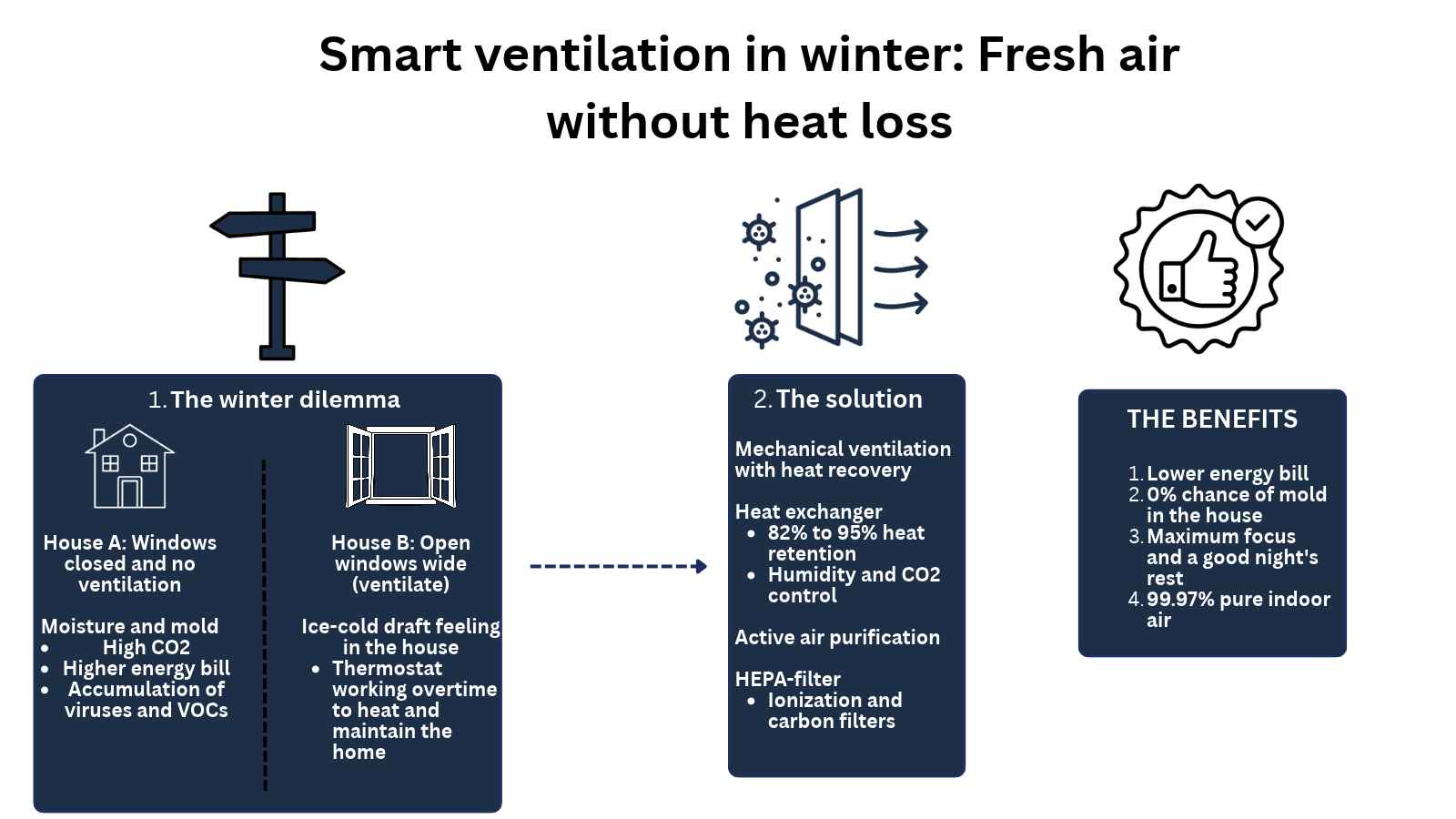
Leaving a window open or tilted for hours on end is not a solution to these problems in the winter, because you’re simply letting cold outside air in. This causes the thermostat to work overtime, and the micro-pollution remains inside the house. Continue mechanical ventilation combined with air purification provides a reliable foundation for a healthy home in the winter.
Ventilation in the Winter Using a Combination of Heat Recovery and Air Purification
In the winter, many homeowners face a double concern: the fear of costly heat loss and the fear of stale, unhealthy indoor air. You don’t want to set the temperature to 23°C because the windows are open for ventilation, but you also don’t want to be in a closed-off, damp space full of bacteria and fine particulate matter.
AeroConsult's advanced mechanical ventilation and air purification technologies, such as the AeroVent system, immediately dispel both concerns. By combining mechanical ventilation with heat recovery and active air purification, you can permanently solve the winter ventilation dilemma in your home.
1. How Heat Recovery Prevents Heat Loss During Ventilation in the Winter
The fear that ventilating in the winter is equivalent to heating the outside air stems from outdated ventilation methods. A modern heat recovery system uses an advanced cross-flow heat exchanger.
- Trapping heat inside the home: the ventilation system extracts the warm, humid indoor air from the home.
- Preheating the cold outside air: At the same time, cold outside air is drawn in. The two air streams cross paths in the heat exchanger. They do not come into contact with each other, but the heat from the outgoing indoor air is transferred directly to the incoming outside air.
- No cold spots or drafts in your home: the fresh outdoor air doesn’t flow back inside as an icy blast, but by the time it reaches your space, it has already warmed up to 17°C to 18°C.
- Efficiency: With heat recovery of up to 82% to 95%, your home stays comfortably warm, and your boiler or heat pump It costs next to nothing to heat, and you'll save hundreds of euros on your energy bill.
2. How Active Air Purification Restores Unhealthy Winter Air to a Clean and Healthy State
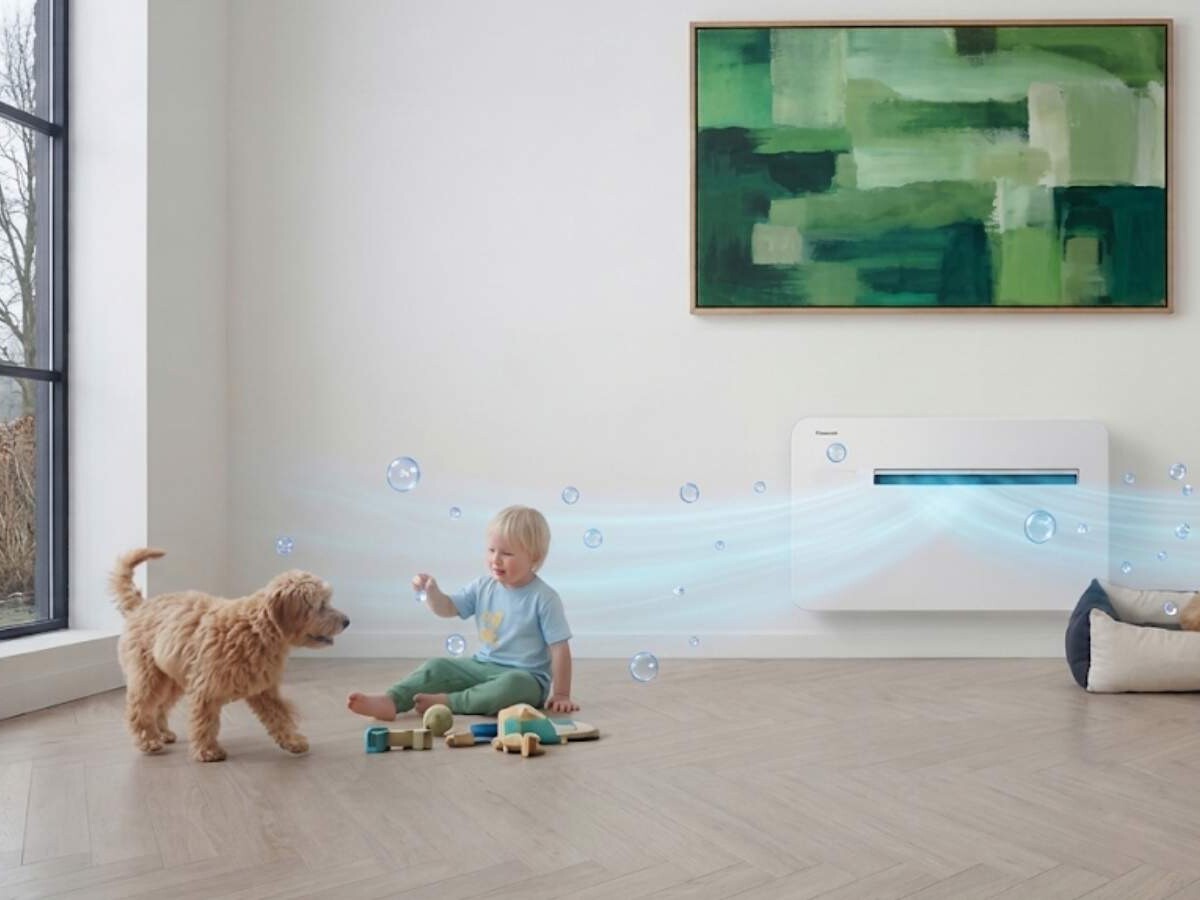
Simply letting fresh outdoor air into the house is often not enough in the winter. Because we spend much more time indoors with the doors closed, a high concentration of harmful particles builds up, resulting in unhealthy indoor air. Air purification actively treats indoor air at the microscopic level through multiple filtration stages.
- The pre-filter and medium filter capture coarse dust, hair, and larger airborne particles from the indoor air.
- The HEPA Filter removes up to 99.97% of fine particulate matter, pollen, soot particles, and allergens that normally penetrate deep into your lungs.
- The activated carbon filter absorbs unpleasant cooking odors, smoke, gases, and harmful VOCs from your furniture and cleaning products.
- Active ionisatie and neutralization electrically charges the airborne, polluting particles, causing them to settle on surfaces in the room and then actively neutralize the bacteria, mold, and viruses in the indoor air.
The Ultimate Winter Synergy
With this combined ventilation and air purification system, you no longer need to ventilate by opening the windows and letting in the cold outside air. AeroConsult’s mechanical ventilation system or air purification system continuously refreshes the indoor air and removes moisture from your home while retaining valuable heat. The air purification system also specifically purifies the incoming and circulating indoor air, making it 100% germ-free and odorless.
Practical Tips: Ventilating and Purifying the Air in Winter Without Losing Heat
With these five practical tips on ventilation and air purification in the winter, you can get the most out of your ventilation and air purification systems during these cold months.
- Let the ventilation and air purification system run 24/7 in its default setting: turn on the mechanical ventilation or air purification system as the AeroVent Never turn it off completely to save electricity. The energy consumption of a modern heat recovery system is minimal, while an increase in humidity and CO2 in your home can cause problems within a few hours. Keep the unit running continuously on the low standard setting and activate the boost setting only during peaks in humidity or odors, such as while showering or cooking.
- Rely on the automatic freeze protection: during freezing weather, people worry that the heat exchanger will freeze. Modern heat recovery systems are equipped with automatic freeze protection that temporarily adjusts the air balance or activates a preheater. Efficiency may fluctuate briefly, but the unit protects itself. Therefore, never turn off the system during freezing weather.
- Understand the difference between ventilation and airing out your home: ventilation—and the purification of indoor air—is the continuous flow of fresh air provided by your ventilation system. Air-out is a brief action to quickly refresh the indoor air during an extreme spike. Want to air out the house more thoroughly? Then open windows on opposite sides of the house for 5 to 10 minutes. The indoor air will refresh quickly, while your walls and furniture retain their warmth.
- Replace and clean Change your filters on time: a dirty filter is less efficient, reduces healthy airflow, and increases your system's energy consumption. Check your HEPA-, carbon and ionization filters according to the manufacturer's recommendations, for example, using an original AeroVent Filter Kit, to ensure clean indoor air.
- Base your decisions on data from a CO2 and hygrometer: to measure is to know. Monitor the relative humidity—aim for 40% to 60%—and the CO2 level in your home. An integrated display on our modern ventilation and air purification units shows you the status of your indoor climate at a glance, so you know exactly when a temporary boost is needed.
Enjoy a warm, healthy, and clean indoor environment this winter
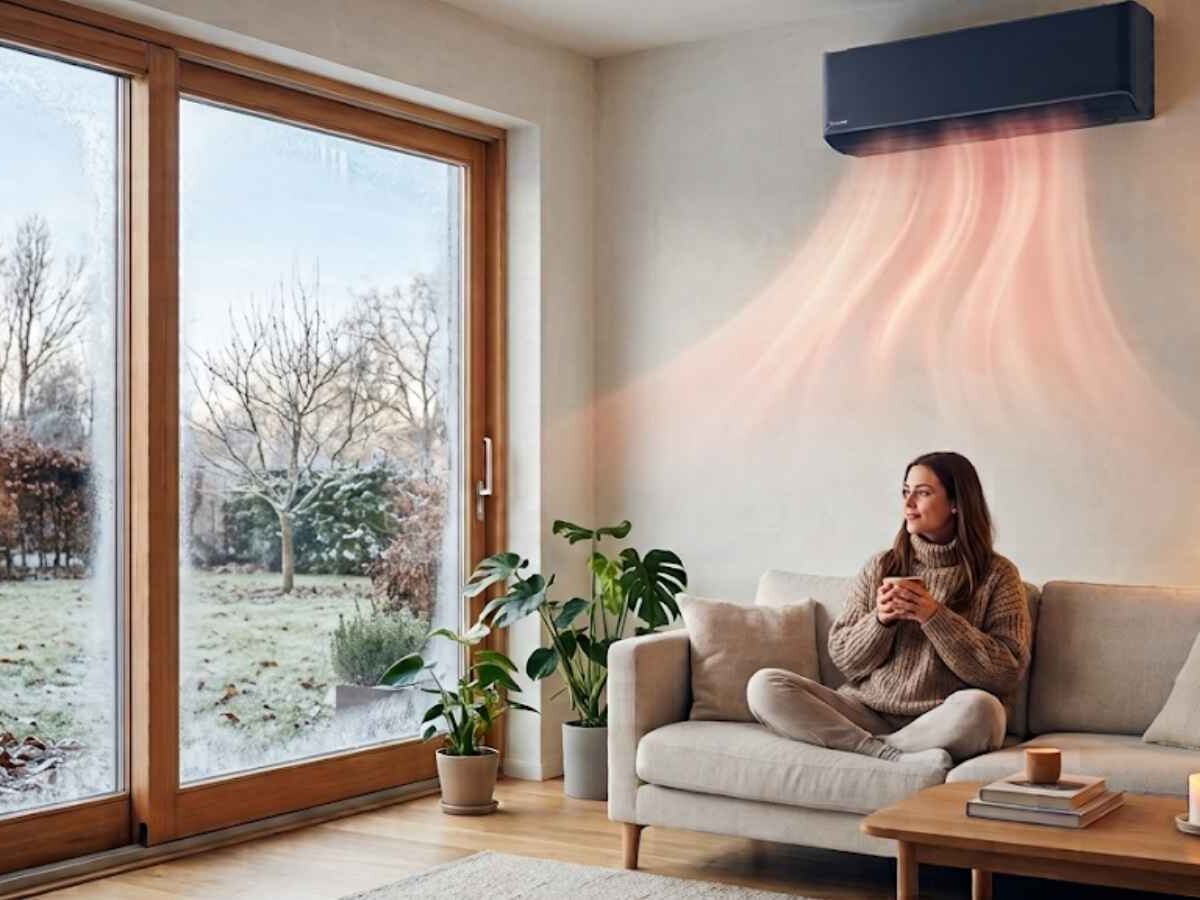
This winter, you no longer have to choose between a comfortably warm home and a healthy living environment. Thanks to our integrated ventilation and air purification solutions, such as the AeroVent You can refresh and purify the indoor air in your home in a smart way, while keeping heat loss to a minimum. That way, you can enjoy fresh, clean indoor air 365 days a year without your energy bill skyrocketing.
Ready for a comfortable and healthy winter? Then discover Our Climate Solutions for air purification and ventilation, or go directly to contact Contact our experts for a free consultation custom-made.
Want to learn more about the benefits of air conditioners? Check out our latest blog posts now.