What if we told you that turning on your air conditioner the moment you feel cold is exactly why your energy bill is so high in the winter? More and more Flemish families and business owners are now combining a dynamic energy contract with a modern air-to-air heat pump. On paper, it’s a winning combination, because with a seasonal efficiency of 4 or higher, such an air-conditioning system generates heat at a low cost. Yet we see that at AeroConsult People are often shocked when they receive their energy bill. How can an A+++ air conditioning system cost so much?
The problem rarely lies with the appliance itself, but rather with a misconception about timing. Anyone who heats their home in the winter based on how cold they feel will end up facing the highest evening peaks on the electricity market and the penalty associated with the capacity rate in Flanders.
The Impact of Dynamic Energy Contracts on Your Air Conditioner Usage in the Winter
With a dynamic energy contract, your electricity rate changes every hour based on the market price. For those who heats using an air-to-air heat pump This, therefore, has a direct impact on the use of your air conditioning system.
- Immediate consumption without storage: an air conditioner does not have a hot water storage tank. The moment you turn on the heat is exactly the moment you consume electricity at the hourly rate specified in your dynamic energy contract.
- The expensive evening peak from 5:00 p.m. to 8:00 p.m.—the hours when families come home and are just looking for some warmth during the cold winter months—are therefore the most expensive hours on the electricity market for energy consumption. Heating your home when you get home automatically leads to the highest heating costs.
- Winter rates: Low rates in winter aren’t caused by the sun, but by offshore wind energy or nighttime off-peak hours from 1 a.m. to 5 a.m. Heating your home with an air conditioning system and a dynamic energy contract therefore requires the right timing rather than a fixed schedule.
- A Double Blow in the Freezing Cold: at sub-zero temperatures The appliance requires a little more power to heat your home due to the defrost cycles. If this coincides with an energy shortage, you’ll end up paying more for lower efficiency.
- Risk of the Flemish capacity tariff: Setting the AC to turbo mode during a low-cost energy hour will send your power consumption skyrocketing. These extra costs will immediately wipe out any savings you’ve achieved through smart timing.
- ‘Set-and-forget’ costs money: combining a dynamic energy contract with a passive thermostat almost always results in a higher bill in the winter. Without active or smart control, you lose the financial benefit of an air-to-air heat pump.
Why Should You Use a Smart Heating System with an Air Conditioning Unit? The Pitfalls of Traditional Heating
Anyone who operates an air-to-air heat pump such as a traditional central heating system, turning the heat on only when the house is cold and turning it off when you leave, means you're missing out on significant financial savings. There are, therefore, a number of pitfalls associated with traditional heating habits when an air conditioning system.
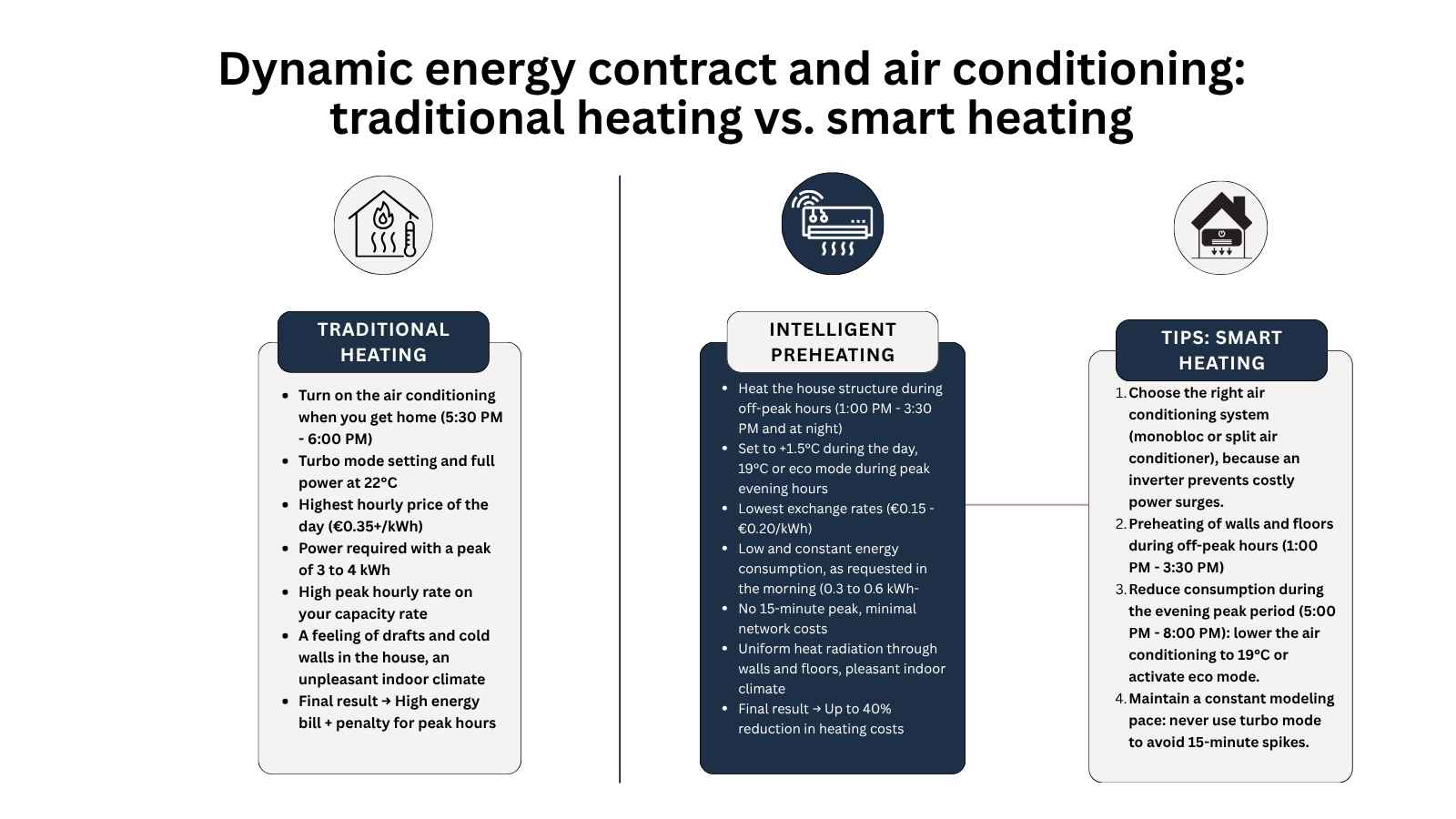
- The evening peak drop: Coming home at 5:30 p.m. and immediately turning up the thermostat forces the air conditioner to heat at maximum capacity at the day’s highest rate.
- The turbo reflex and the capacity rate: Trying to quickly heat up a cold room using the boost or turbo mode suddenly consumes 3 to 4 kW of power. That power spike unnecessarily increases your grid rates for the rest of the month.
- Loss of efficiency due to ‘on/off’ operation: An air-to-air heat pump with inverter technology achieves its highest efficiency when it operates continuously and smoothly at a low load. Constantly turning the system off and then running it again at full power later consumes more kilowatt-hours and accelerates wear and tear.
- Ignoring the cold surfaces in your home: Traditional heating only quickly warms the air inside your home. The walls and floors remain cold, causing the temperature in your home to plummet as soon as the air conditioner turns off, and the room immediately feels chilly.
- Loss of comfort due to drafts and fan noise: An air conditioner that is forced to reach a specific desired temperature runs at maximum fan speed. This results in noticeable air movement and a drafty feeling in the home, rather than even radiant heat throughout the room.
- Blind piercing at extreme cold: When severe frost coincides with peak prices on the power market, the COP of your air conditioning system temporarily drops. If you don't switch modes wisely, heating will cost more at those times than it would with a traditional gas boiler.
How can you heat your home efficiently using your air conditioner? A step-by-step guide for a dynamic contract
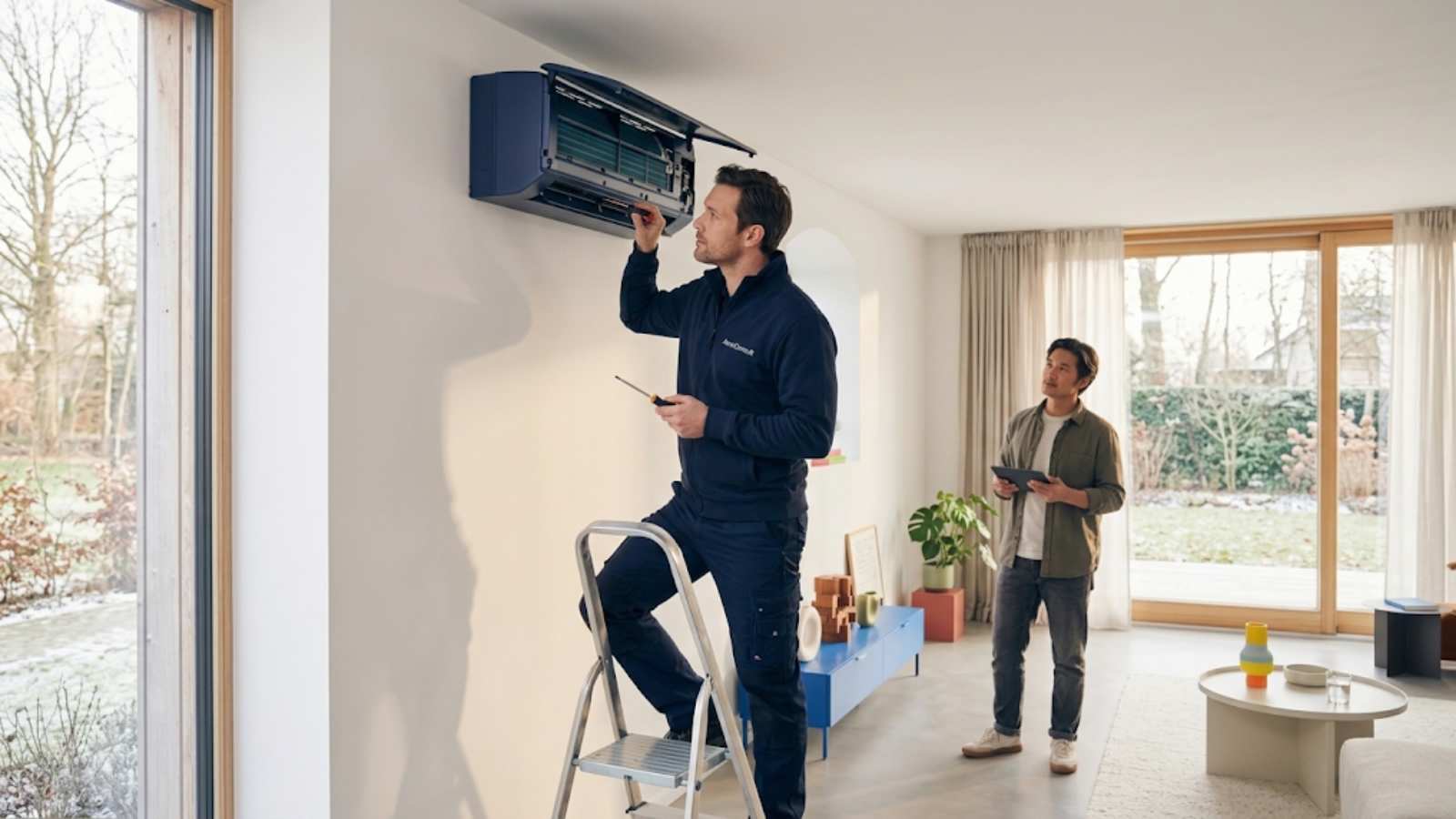
Smart heating with a dynamic energy contract hinges on two key factors: the right air conditioning system and a well-thought-out operating strategy. Those who combine the two can harness their home’s thermal mass to effortlessly bridge expensive peak hours.
Step 1: Choose the right air conditioning system
Without a high-quality air-to-air heat pump With a wide range, smart control alone isn't enough. At AeroConsult, we install two types of HVAC systems that are technically designed to respond perfectly to dynamic energy rates and the Flemish grid.
- Split-unit air conditioner: You choose this system because it offers the highest possible seasonal efficiency and a very wide modulation range. The inverter technology easily scales down to a minimum partial-load capacity of just 0.2 to 0.3 kW. This keeps your energy consumption consistently low and helps you avoid high quarter-hourly peaks. Furthermore, it allows you to efficiently heat a large living space or multiple rooms separately using a single central outdoor unit, all while ensuring whisper-quiet operation indoors.
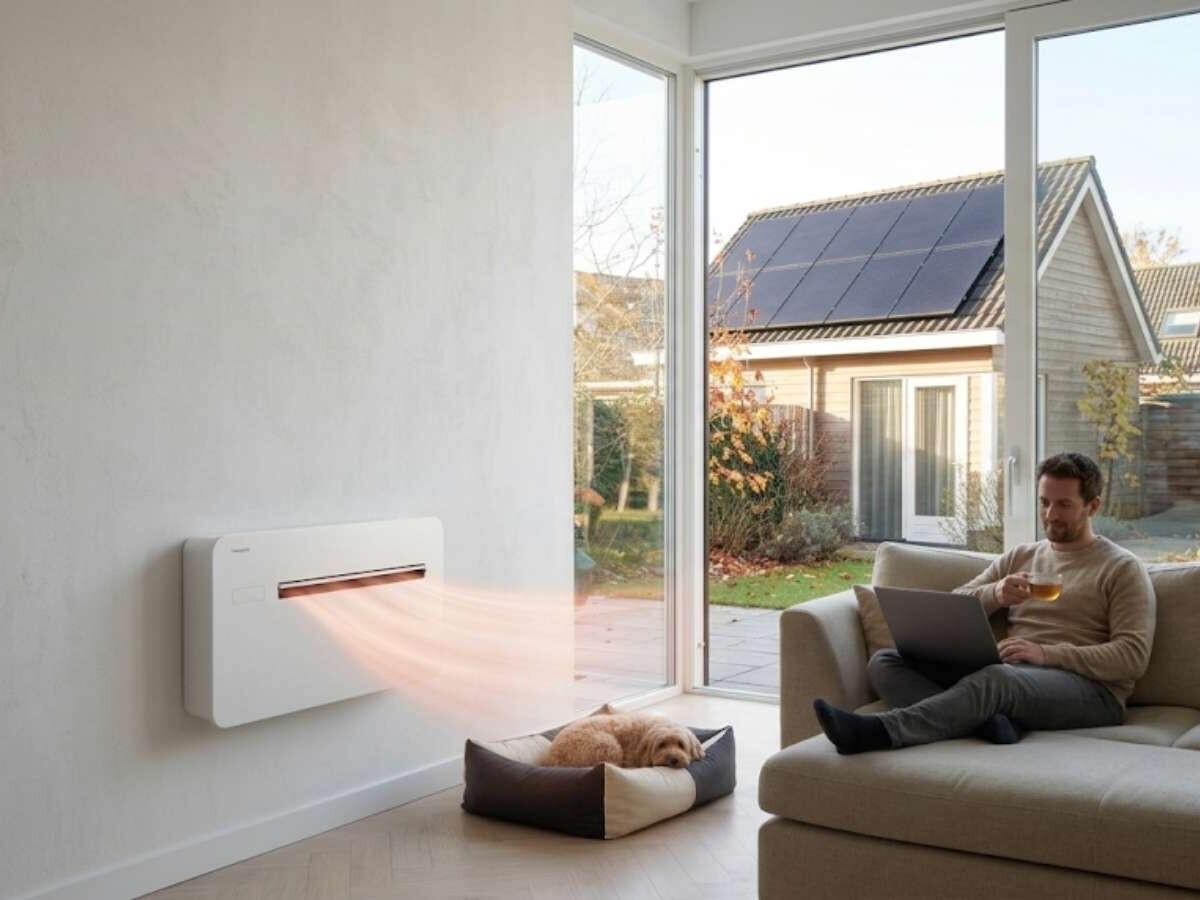
- Monoblock airco: It is a full-fledged air-to-air heat pump housed in a compact indoor unit, with no outdoor unit on the building facade. It operates via two discreet ventilation grilles and heats a room quickly and energy-efficiently through direct air injection and inverter technology. This system is suitable for apartments, townhouses, or buildings with protected facades where installing a traditional outdoor unit is not permitted for urban planning or practical reasons.
Step 2: Take Advantage of Your Home's Thermal Mass
Once the proper HVAC system is installed, use thermal preheating. Instead of just heating the indoor air when you feel cold, store heat in the walls, the concrete subfloor, and solid wood furniture during off-peak hours.
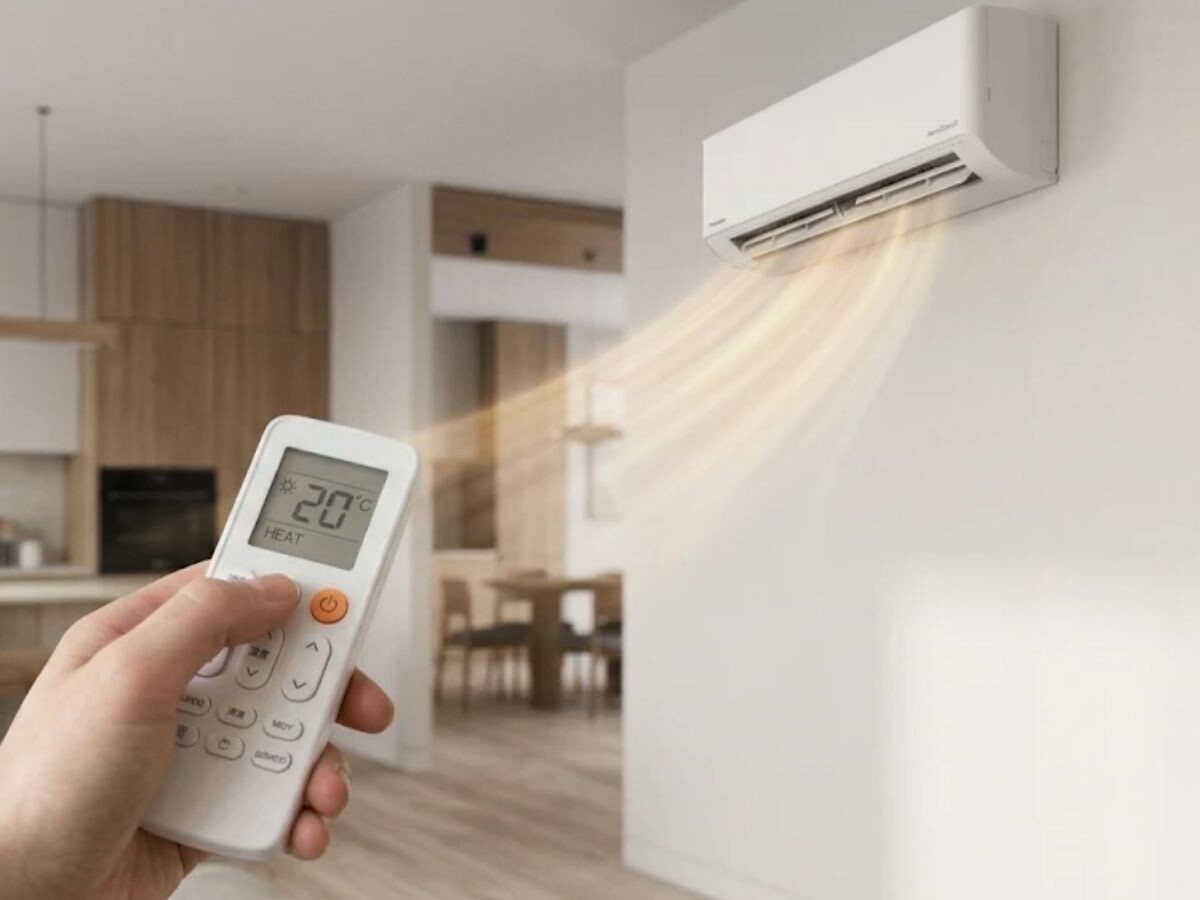
- Preheating during off-peak hours: Increase the desired temperature by +1.5°C to +2°C above your comfort level when the hourly rate is low. This is usually in the early afternoon or at night.
- Heat storage during the evening peak (5:00 p.m. – 8:00 p.m.): Set the setpoint to 19°C during the most expensive hours, or switch to eco mode. The walls slowly release their stored heat. The temperature in the house will then drop by no more than 1°C. The compressor runs at its lowest setting or shuts off completely.
- Modulate continuously and gently: never activate turbo mode. Let the inverter compressor run at a low fan speed for extended periods to avoid peak power consumption and additional utility costs.
- Heat by zone: heat only the rooms where people are actually living or working. During the day, heat the home office; in the evening, heat the living area.
- Automate your control settings: set the off-peak and peak times using your device’s app, or connect the air conditioner to an energy management system (EMS) that automatically tracks EPEX hourly rates.
The Smart Daily Schedule for the Heating Season
In practice, this translates to a smart and streamlined daily routine. Between 4:30 a.m. and 6:30 a.m., you turn on the air conditioning set to 20.5°C with a gentle fan setting to warm up the home at a low nighttime rate. During the morning rush hour (7:00–8:30 a.m.), lower the desired temperature to 19.5°C so that the inverter consumes minimal energy when the rates on your dynamic energy contract rise.
The main warm-up session will take place between 1:00 p.m. and 3:30 p.m. Thanks to solar- When wind energy is available, energy prices often drop, and that’s the time to raise the desired temperature to 21.5°C to 22°C to store cheap heat in your walls.
During the expensive evening peak hours (5:00 p.m. – 8:00 p.m.), set the unit to 19°C or eco mode. The air conditioner will be completely shut off, while the heat stored in your home’s structure will keep the living space comfortable. Only after 8:30 p.m. should you resume a low-power maintenance mode at 20°C, without the risk of high energy spikes.
What are the benefits of smart preheating with your air conditioner? The benefits for your energy bill and dynamic contract
Anyone who moves away from traditional heating and chooses air-to-air heat pump A proactive approach is immediately reflected in the energy bill and in the return on your dynamic energy contract.
- Up to 40% lower kWh costs: By shifting the bulk of your energy use to off-peak hours—that is, the afternoon and night—you can purchase energy at rock-bottom rates and avoid the expensive evening peak rate of €0.35/kWh or more.
- Control over the capacity rate: By carefully and intelligently adjusting your air conditioning system to a low power setting and avoiding turbo mode, you can prevent high power spikes. This keeps your distribution and grid costs consistently low.
- A more favorable tipping point compared to natural gas: with an average winter efficiency, with a COP of 3.5 to 4 and low dynamic hourly rates, your air conditioner produces heat at half the cost of the cost of a modern condensing gas boiler.
- Lower total energy consumption, higher efficiency: an inverter air conditioning system that runs continuously at a low partial load consumes fewer kilowatt-hours per degree of heat than a unit that, after being shut down, has to heat up a cold room at peak load each time.
- Make the most of dynamic market opportunities: on winter days when there’s plenty of offshore wind energy and electricity prices are plummeting, you can literally heat and store energy for your home at a fraction of the normal daytime rate.
- Optimal living comfort at no extra cost: because your walls and floors retain heat, your home stays at a comfortable temperature during peak hours without your air conditioner having to draw expensive electricity from the grid at that time.
Looking for an air-to-air heat pump that’s ready for dynamic energy rates? Choose AeroConsult
A dynamic energy contract offers tremendous opportunities to significantly reduce your heating costs, but its effectiveness depends entirely on having the right air conditioning system. An undersized air conditioner must run constantly at full speed in cold weather, resulting in reduced efficiency and high quarter-hourly peaks. An oversized air conditioning system, on the other hand, will cycle on and off, causing unnecessary wear and tear on the compressor.
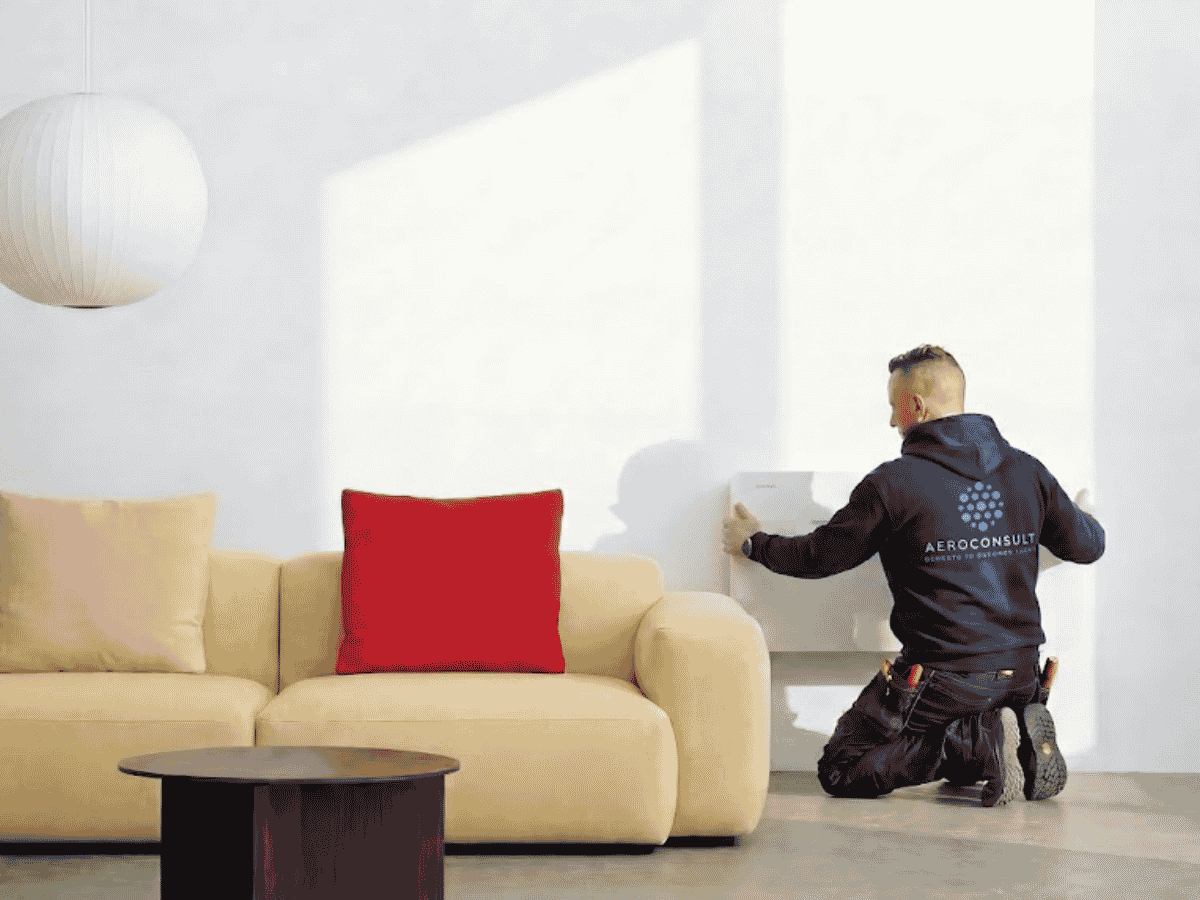
At AeroConsult, we tailor your air-to-air heat pump system It’s tailored precisely to the size and insulation level of your home, your lifestyle, and your specific energy rate. We install only high-efficiency systems from quality brands and configure the controls so you can enjoy the lowest heating costs this winter without any worries.
Would you like to permanently lower your energy bill this winter by a smart air conditioning system Custom? Take contact Contact our experts for a free consultation custom-made.
Want to learn more about the benefits of air conditioners? Check out our latest blog posts now.