It’s that time of year again. An intense summer heat wave has our country firmly in its grip. As temperatures in city centers easily soar past 30°C, we’re all flocking to the cool comfort of our homes. As soon as you step inside and want to shake off the oppressive heat, a universal, automatic reflex often kicks in: you reach for the remote control for your air conditioner and set the temperature right away to the very lowest setting, around 16°C to 18°C. The cooler the settings, the faster it cools down inside, right?
But nothing could be further from the truth. This is probably the biggest misconception when it comes to home climate control—also known as the air-conditioning paradox. Blindly setting your air conditioner to freezing temperatures actually makes your indoor climate feel unpleasant, chilly, and damp. It also unnecessarily drives up your energy bill.
How does this paradox arise, what are the drawbacks of this “heat wave reflex,” and how can you properly set your air conditioning system for optimal comfort? AeroConsult explains it all to you in great detail.
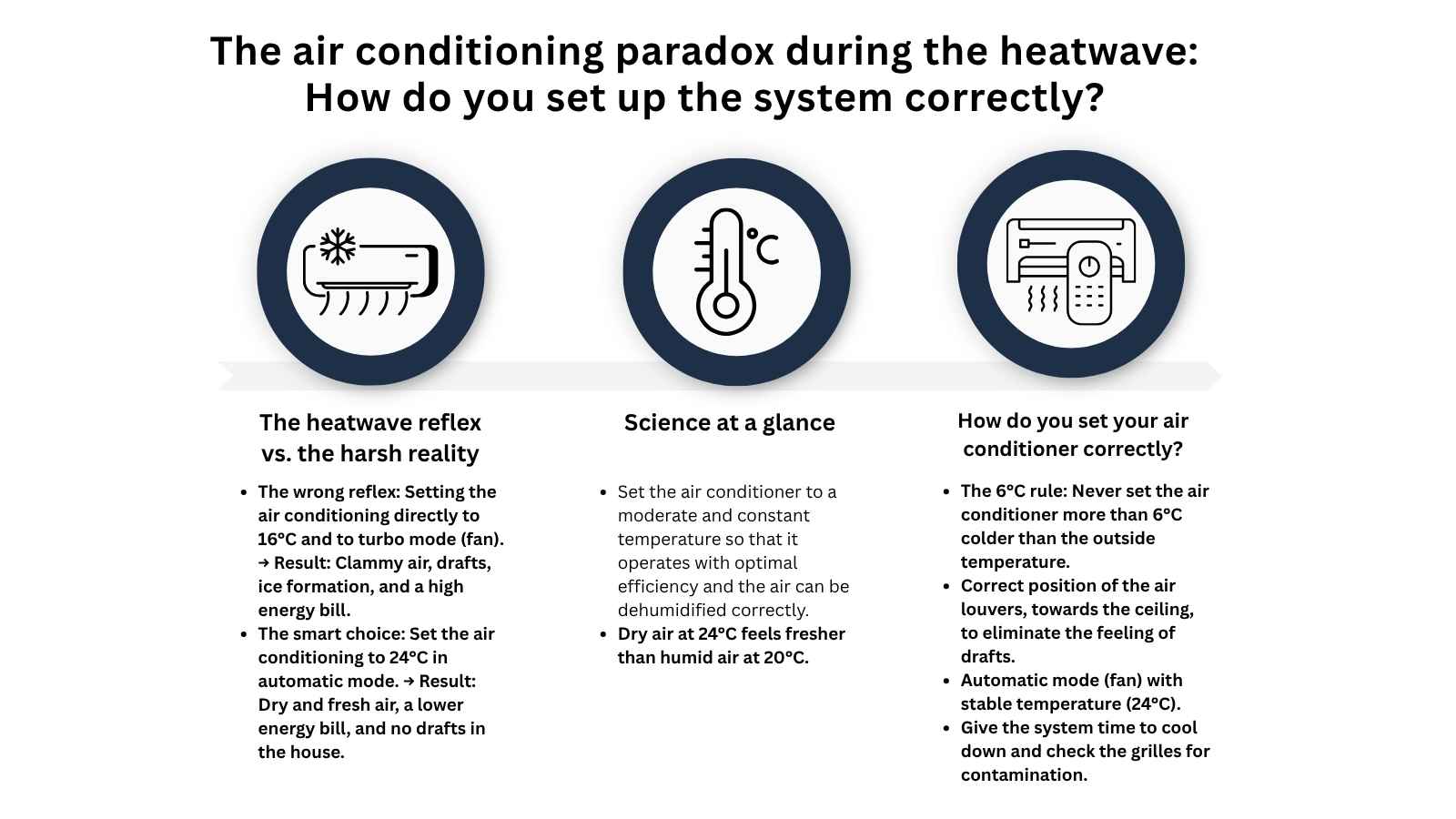
The Big Misconception: Why We Cool Our Homes Incorrectly During a Heat Wave
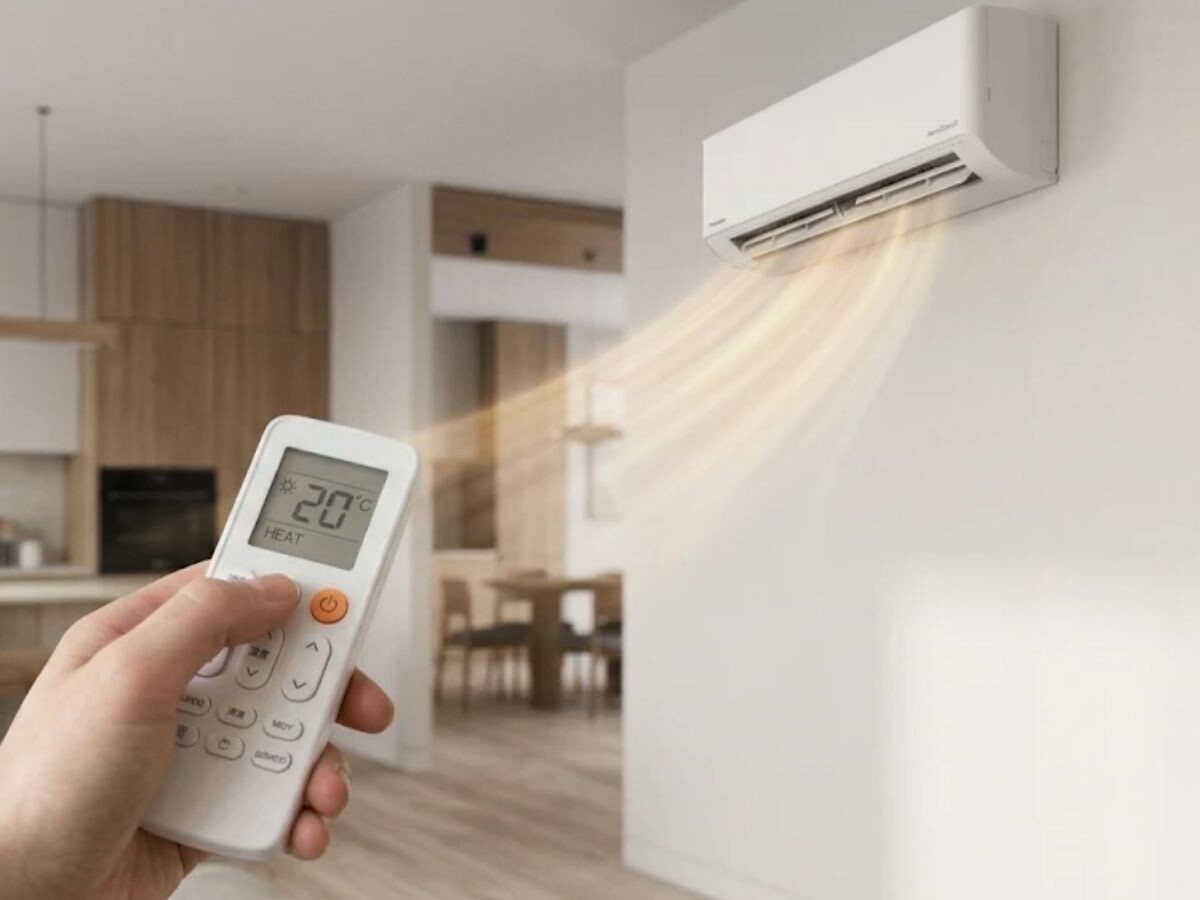
When we walk into the living room, sweating and panting, during a heat wave, many of us make the same mistake. We reach for the remote control for the air conditioning system and immediately start pressing the buttons until the display shows 16°C or 18°C. At the same time, the fan speed is set to the highest setting or ‘turbo’ mode.
But what exactly are we doing wrong here? And why does this actually backfire?
1. The ‘accelerator pedal error’
The biggest mistake you can make is thinking that the temperature control works like a car's gas pedal. The lower you set the temperature, the harder or faster the air conditioner will cool.
In practice, it works an air conditioner of heat pump However, it functions like a binary switch. Whether you set it to an unrealistic 16°C or a comfortable 23°C, the air blown into the room by the indoor unit is exactly the same temperature in both cases. Usually, this is around 10°C to 12°C.
So what are you really doing wrong? By setting your system to 16°C, you’re not making the air conditioner cool faster; you’re simply instructing it to, as it were, “never stop.” During a heat wave, an indoor temperature of 16°C is structurally impossible due to the constant heat radiation from your roof and walls. You’re forcing the system to run nonstop at 100% capacity for hours on end.
2. The ‘hurricane setting’
The second mistake is manually overusing the fan speed. We turn the fan up to the maximum in the hope of creating a ‘cool breeze’ in the house.
What are you doing wrong here? An air conditioner is designed to draw warm indoor air over an ice-cold copper coil, the evaporator. If you set the fan to the highest setting, you force the warm air through the indoor unit at a higher speed. The air passes by the cooling coils so quickly that the system doesn’t have time to efficiently remove the heat and moisture from the air. So instead of a gentle, cool breeze, you end up with a loud, harsh blast of lukewarm, muggy air.
3. The ‘on-and-off’ button
Many people don't turn on the air conditioner until it's already 28°C inside, and then let it blow ice-cold air for an hour before turning it off again as soon as they start to feel cold. A few hours later, it's sweltering again, and the whole process starts over.
What are you doing wrong here? You will ensure that the air conditioning system it doesn't get a chance to cool down the mass of your home—that is, your furniture, walls, and floors. As soon as you turn off the air conditioner, the heat radiates from the walls right back into the room. This ‘yo-yo’ effect causes huge temperature fluctuations and forces the compressor to work extremely hard—and above all, high startup costs. This is the same effect as constantly accelerating and slamming on the brakes in traffic.
The Immediate Effects: What Does That "Ice-Cold Reflex" Really Do to Your Home and Body?
At first glance, setting your air conditioner or heat pump too low may seem like a harmless attempt to cool down quickly. In reality, however, this sets off a chain reaction of negative effects that can impact your home comfort, your health and your wallet directly affect. When you your air conditioning system When a heat wave forces temperatures to reach unrealistic levels, there are inevitably many consequences and drawbacks.
1. The ‘cave effect’: A freezing-cold but stuffy indoor environment
Because you’ve set the air conditioner to an unrealistic setting, the fan keeps running at full speed. The temperature drops, but the high air velocity prevents the system from dehumidifying efficiently. The result is a freezing-cold but damp room. It already feels like a damp cave or a cold storage room inside. Your walls and furniture will start to feel damp, and air quality is thrown completely off balance.
2. Health Issues: The infamous ‘air-conditioning sickness’ is a reality
Medical symptoms Air conditioning problems are almost never caused by the unit itself, but purely by incorrect operation. The strong, continuous flow of ice-cold air rapidly dries out the mucous membranes in your nose and throat. This leaves you wide open to viruses and bacteria. In addition, the constant draft causes:
- Stiff muscles, especially a sore neck, shoulders, or back.
- Dry, itchy eyes and a headache upon waking.
- Irritated airways and a persistent cough.
3. Thermal shock upon exiting
When you set the indoor temperature to 18°C while it’s 31°C outside, you create an artificial temperature difference of as much as 13 degrees. The human body isn’t designed to handle that transition so abruptly. When you step back outside from the freezing-cold room, your cardiovascular system takes a massive hit. Your blood vessels dilate very quickly, you immediately start sweating profusely, feel dizzy, and suddenly feel extremely lethargic. The cooling effect you experienced indoors is reduced to zero in an instant.
4. Wear and tear and a shorter service life for your system
An air conditioning unit of heat pump is a high-tech piece of equipment. Just like a car engine that’s constantly revved in the red zone, an air conditioning system that has to run continuously at 100% capacity for hours on end wears out exponentially faster. The compressor overheats, the mechanical parts are pushed to their limits, and the risk of a sudden breakdown in the middle of a heat wave—when wait times for technicians are the longest—increases.
5. A financial hangover on your electricity bill
This is the drawback that you feel right away in your wallet. Cooling a home requires energy, but the difference in energy consumption between a system that gradually works its way up to 24°C and one that desperately tries to reach 17°C is enormous. Those last few degrees of cooling consume the most energy. You’re forcing the unit into an inefficient operating mode that you’ll end up paying for later on your energy bill.
6. Ice buildup on the indoor unit
If an air conditioner is set too cold and the filters are even slightly dusty, the temperature of the evaporator can drop below freezing. The condensation, which normally drains away properly, then freezes immediately on the fins. As a result, the air conditioner becomes blocked by a layer of ice. It stops cooling, and as soon as you turn it off, the ice melts, leading to a leaking indoor unit and water damage to your wall or floor.
The Science Behind Comfort: Why Freezing Cold Isn't Necessary at All
To understand how it should be done, we need to look at the science behind a pleasant indoor climate. The human body does not perceive comfort based solely on the temperature shown on a thermometer. Comfort is the result of the interplay between two crucial factors: temperature and relative humidity.
Hot summer days in Belgium are often very humid—just think of the typical, oppressive, and muggy heat you feel before a thunderstorm. This humidity makes it harder for our bodies to release heat through sweating, which makes us feel stuffy.
High-quality air conditioning does More than Just Cooling the Air. First and foremost, it is a powerful dehumidifier. As the warm indoor air flows past the cold fins of the indoor unit, the moisture in the air condenses. This moisture is then drained outside through a condensate hose.
The Golden Rule for Perceived Temperature in the Home
Dry air at 24°C feels much cooler, more comfortable, and more pleasant to our bodies than a muggy, humid breeze at 20°C.
When you set the air conditioner to a realistic, moderate temperature, the system has time to circulate the air in the room gently and evenly. The air is efficiently dehumidified, causing the perceived temperature to drop immediately to a comfortable level, without making you feel like you’re in a ‘freezer.’.
So what are the correct settings for your air conditioner or heat pump?
Now that we know what not to do, the question remains: How can you transform your home into an oasis of healthy coolness? The secret to a perfect summer indoor climate during a heat wave lies in its subtlety.
The golden rule is the 6°C rule. Limit the difference between the indoor and outdoor temperatures to no more than 5°C to 6°C. Is it 30°C outside? Then aim for a temperature of 24°C or 25°C inside your home. This might sound warm, but thanks to the lower humidity, it will feel like a wonderfully crisp spring day to your body.
At AeroConsult, we primarily install Two types of air conditioners. Depending on the specific conditions of your home, use a specific method to ensure the system is set up perfectly.
Type 1: The split-unit air conditioner
The split-unit air conditioner This is the classic system in which one or more indoor units are connected to a single outdoor unit. This system is extremely powerful, whisper-quiet, and perfect for deep, long-lasting cooling of large spaces or multiple rooms.
The right setting for a comfortable indoor climate:
- Activate ‘Cool’ mode (snowflake icon): Set the temperature to 23°C or 24°C. Be patient. The system will then comfortably cool and dehumidify the room without the unit having to work too hard.
- Raise the slats manually: Use the remote control or app to adjust the louvers as high as possible, pointing toward the ceiling. Because cold air is heavier than warm air, the cool air will descend very gradually and evenly. This prevents a chilly draft from blowing directly on the back of your neck or your face.
- Use the automatic fan setting: Do not manually select the highest setting. In automatic mode, the split-unit system automatically adjusts to the perfect balance. As a result, the unit only blows at full power when necessary and silently switches to a lower speed as soon as the room approaches the desired temperature. This maximizes dehumidification and keeps the indoor unit silent.
Type 2: The monoblock air conditioner
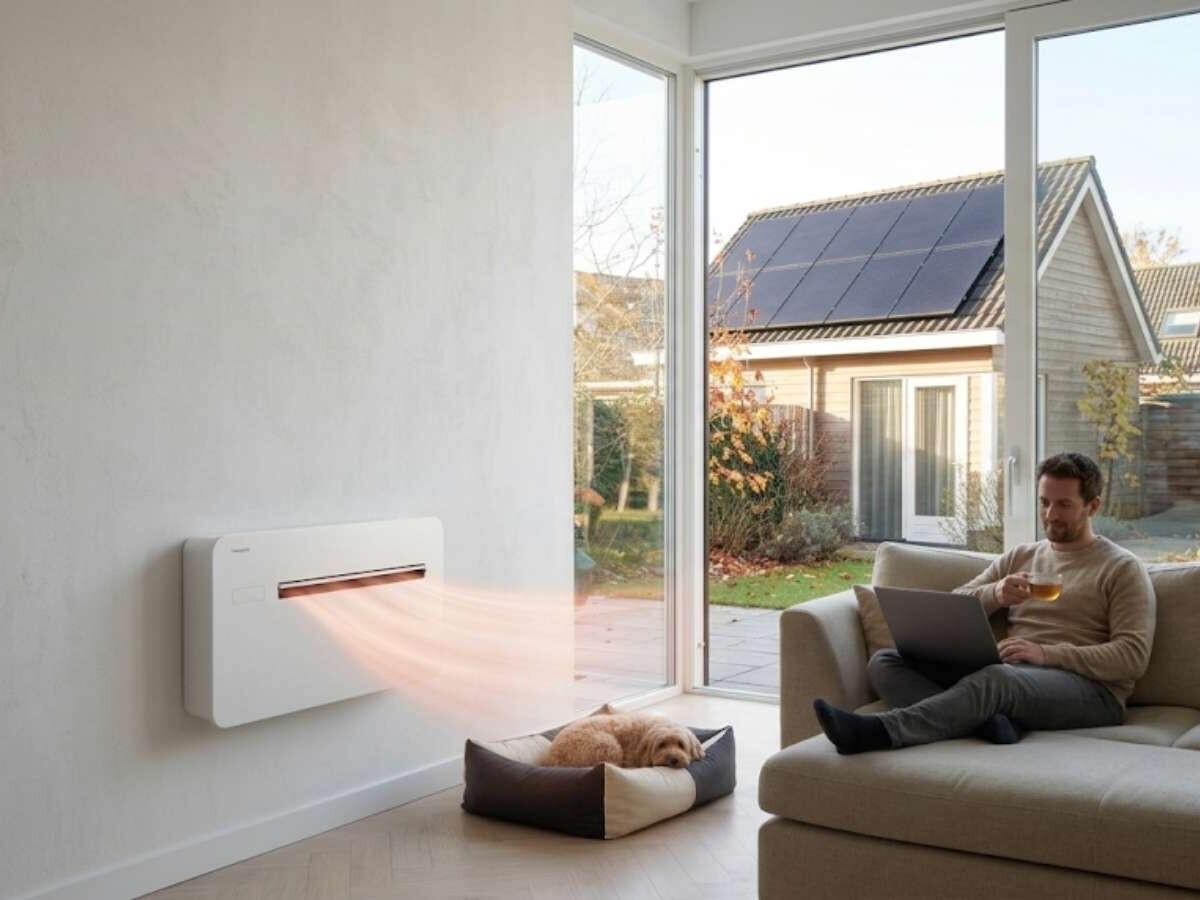
Do you live in an apartment, a historic building in the city center, or is it simply not possible to install an outdoor unit on the exterior wall? If so, then our monoblock air conditioner The ideal solution. All components are housed in a stylish indoor unit, which draws in and exhausts air through two discreet grilles in the exterior wall.
- Give the system some time: Because a monoblock contains all the technical components inside the indoor unit, the system operates most efficiently when you keep it running constantly at a moderate setting, for example, at a temperature of 24°C. Don’t wait to turn on the air conditioner until the room has already turned into a sauna, because then the unit will have to work hard to expel the heat through the vents.
- Adjust the fan speed intelligently: With a monoblock air conditioner, we recommend using the medium or automatic fan setting. This keeps indoor noise levels to a minimum and gives the built-in condenser time to effectively dehumidify the indoor air.
- Check the outdoor grates: Make sure the discreet exterior vents on the facade are free of leaves or dust so that the air conditioner can blow its warm air outside unobstructed.
General ‘best practices’ for each type of cooling
In addition to the specific settings for AeroConsult units, there are a number of general practices that can drastically improve indoor air quality.
- Keep the heat out: An air conditioner is a heat pump. This means that the unit moves heat around. When the sun shines unobstructed through the large windows in your home, you’re fighting the heat. Close the roller shutters or blinds during the day and keep windows and doors closed as long as it’s warmer outside than inside.
- Dry mode—the little droplet—as a secret weapon: Is it not extremely hot outside, but still very oppressive and stuffy? Then try switching your air conditioner to the dehumidification mode. Simply by removing moisture from the air, the perceived temperature drops immediately, without the compressor having to produce ice-cold air. This is energy-efficient and comfortable.
The Outdoor Unit and Filters: The Invisible Impact on Your Comfort
Even if you set your remote control to the very best setting, it won't be effective if the air conditioning system's core components can't breathe freely. During a heat wave, your system's outdoor unit must be able to release the heat it has absorbed indoors back outside.
Is the outdoor unit exposed to direct sunlight all day, or is the space around it blocked by plants, wooden enclosures, or stored-away patio furniture? If so, the unit cannot dissipate its heat, which reduces its cooling efficiency while causing electricity consumption to skyrocket. So always ensure there is unobstructed airflow around the outdoor unit.
In addition, the air filters in the indoor unit play a crucial—and often overlooked—role.
- Clogging reduces efficiency: Dusty or pollen-clogged filters reduce the amount of air the system can move and, therefore, its cooling capacity.
- More drafts and noise: Because less air is passing through, the fan has to run faster to achieve the desired effect. This results in additional noise and a much sharper, unpleasant airflow that negatively affects the perceived temperature.
- Air Quality: Filters Once they are saturated, they can no longer optimally removing dust and allergens, which can be harmful to your breathing during a sweltering heat wave.
A regular and professional Air Conditioner Maintenance It is therefore not an unnecessary luxury. It ensures that your system performs exactly as it should, especially on the days when you need it most.
Conclusion: Smart cooling means comfortable enjoyment
You don't beat a heat wave with ice-cold cooling power, but with a smart, well-thought-out, and balanced indoor climate. By your air conditioner of heat pump By setting it according to the 6°C rule, adjusting the louvers correctly, and giving the system time to dehumidify, you’ll enjoy a wonderfully fresh home. This way, you’ll stay productive during the day and sleep like a baby at night—no drafts, no muscle aches, and no worries about the next energy bill.
Have you noticed that your current air conditioning system is struggling to keep your home comfortable during this heat wave? Or do you hear strange noises when you turn it on? Or has it been a while since a technician checked your filters and refrigerant?
Don't just sit around in this muggy heat—take action today contact Get in touch with our experts. Work with us to create the perfect indoor climate, all year round, and enjoy Our Free Expertise.
Want to learn more about the benefits of air conditioners? Check out our latest blog posts now.